
We Don’t Hate Fast Fashion, We Hate Being Associated With It.
How “I don’t shop there” became a personality trait. Exploring Shein's turn into fashion’s favorite scapegoat, and why everyone else was allowed a rebrand.

“At the end of the day, we’re all wearing fast fashion. Some of us just hide it better.”
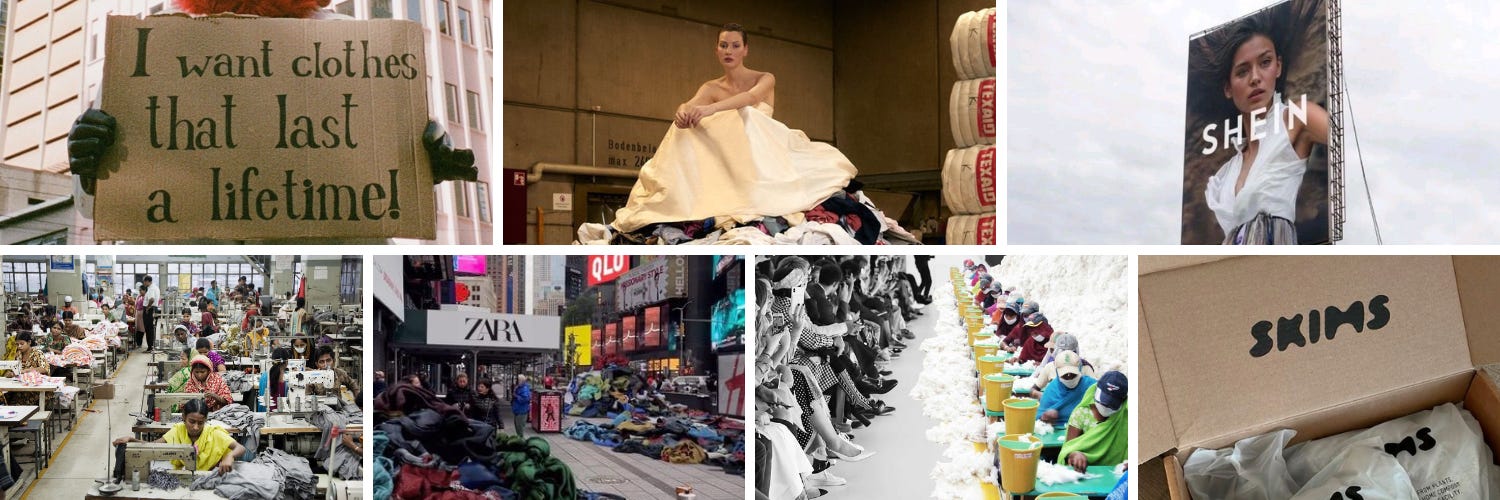
We have often either heard, or uttered the words: “I don’t shop there.” At some point however, that sentence stopped being information and became a personality trait, reeking of moral superiority and an underlying desperation to be exclusive.
In fashion, there are more than enough phrases which signal taste, discernment, and moral superiority. Yet none are so quick to point out that taste is not solely determined from where you buy your clothes, it’s about where you refuse to. And no brand has made that refusal more culturally valuable than Shein.
It is no hidden truth that Shein has cemented its place fashion’s favorite scapegoat: the brand we point to when we want to prove we’re selective, ethical, and informed. It is often the first and only brand people discuss when on the topic of fast fashion, and seems to fall under scrutiny for its questionable labor practices. The brand is objectively the easy villain in a system that runs far deeper than any single logo. Hating Shein has become shorthand for being “above” fast fashion, while quietly continuing to shop from brands that operate on the same timelines, use the same materials, and rely on the same global labor structures.
Somehow, Zara, H&M, Skims, Princess Polly, and countless others were allowed a rebrand. Shein wasn’t. One became a moral failure. The rest became aesthetic choices, and in some cases even a luxury brand.
This post isn’t a defense of ultra-fast fashion. It’s an examination of how ethics, status, and shame got tangled together, and why saying “I don’t shop there” often has less to do with workers, sustainability, or impact, and more to do with who gets to participate in fashion without being judged.
In an industry built on visibility, speed, and image, the real crime isn’t consumption.
It’s being “caught” consuming in the wrong way.
Why We Hate Shein (But Still Wear Zara)
I’ll be the first to admit that I hated on Shein before, both publicly, and in private, refusing to shop their out of distaste for their widely broadcasted and unethical practices. I’ve also absolutely fallen into the belief that buying from brands like Princess Polly, Aerie, Edikted, Zara, or H&M was somehow better. It took me longer than I’d like to admit to realize that most of these clothes are made the exact same way, using the same synthetic materials, same speed, same factories, same labor structures. However they are each wrapped in different branding and portrayed very differently online.
Ethical Outrage Loves an Easy Villain
Shein has become fashion’s moral shorthand. Say the name and people already know what you “stand for.” Allegations of supporting exploitation, mass overconsumption via Tiktok hauls, and to put it plainly: being “cheap” are quick to follow. No nuance required.
But those same people, myself included at times, will still shop at brands that operate on identical fast-turnaround models, which release hundreds of styles weekly. Brands that rely heavily on synthetics and outsource production to the same regions, under the same economic pressures. With that being said, the difference isn’t the system. It’s the optics.
Overconsumption Isn’t a Brand Problem. It’s a Behavior Problem.
Let’s get one thing straight: buying fifteen bathing suits for a three-day vacation is not good. It doesn’t matter if they’re from Shein, Princess Polly, or a “conscious” brand charging triple.
Overconsumption is real and so is trend cycling, as well as disposable fashion.
But does that automatically mean shopping at Shein is entirely bad?
Or does it mean we’re avoiding the harder conversation about how much we buy, how often we buy, and why?
Shein didn’t invent overconsumption.
It just stopped pretending otherwise.
Investigate Everyone. Not Just the Easy Target.
If labor conditions are the concern, and they should be, then Shein’s working conditions deserve investigation the same way every global fashion brand’s do.
Nike. Zara. H&M. Luxury conglomerates. Influencer-founded brands.
Yes, even the ones we culturally protect.
It’s one thing to call out Shein for its speed and scale. It’s another when brands we already idolize end up in the same accountability bucket as ultra-fast fashion giants.
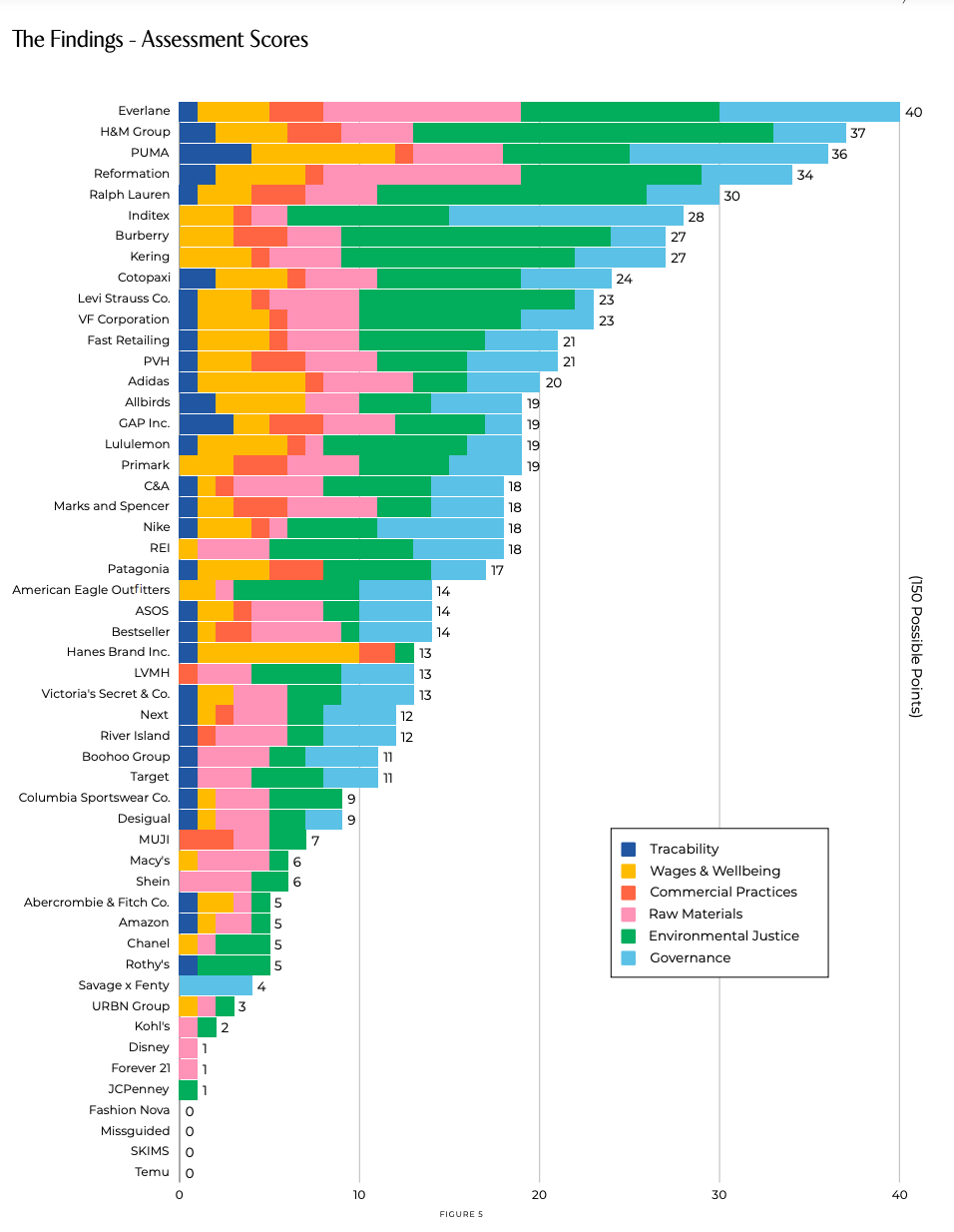
A recent independent analysis in the Fashion Accountability Report evaluated more than 50 global apparel companies on factors like human rights, environmental impact, worker well-being, transparency, and governance. What’s striking is that some labels we think of as more “acceptable” — including Skims — scored just as poorly as bargain-basement marketplaces like Temu.
In that assessment, both Skims; the billion-dollar empire co-founded by Kim Kardashian; and China-based Temu received zero out of 150 points, landing at the absolute bottom of the chart alongside brands like Fashion Nova and Missguided.
That kind of score reflects a lack of transparency on supplier practices, no meaningful progress on worker welfare or environmental justice, and little evidence of ethical improvement strategies.
Nike partnering with Skims suddenly makes a lot of sense when you remember that both exist within massive global supply chains built on outsourced labor and aggressive cost efficiency. But no one panics, because the branding is elite, the associations are aspirational, and wearing those logos elevates your social image.
Ethical concern stops where status begins.
So… Are We Actually Better?
I had to confront this myself: I wasn’t consuming less—I was just consuming more selectively. Buying from brands the internet approved of. Paying more for the same materials. Feeling morally superior while doing the same thing with better branding.
That realization is uncomfortable. But it’s necessary.
Because if we were truly outside the system, we wouldn’t need a villain to feel virtuous.
And maybe the real question isn’t whether Shein is bad—but why we need to believe we’re better.
At the end of the day, we’re all wearing fast fashion.
Some of us just hide it better.
This was so informative and really made me self reflect- can’t wait for the next!
I really enjoyed reading this! It was thoughtfully written and made me reexamine my own thoughts on Shein and fast fashion in general.